A raised bed garden design transforms a simple vegetable patch into an organized, productive, and beautiful landscape. You’ll love how raised bed garden design improves drainage, reduces weeding, and makes planting, tending, and harvesting a joy — all while adding architectural interest to your yard. Picture neat rows of brick planters filled with lush greens, wooden beds connected by stone walkways, or a potager garden where flowers and vegetables mingle under soft evening lights.
From gardens with many different types of flowers and plants to vegetable beds with trellises and arbors, from stone walkways between wooden planters to beds strung with fairy lights for twilight tending, these raised bed garden design inspirations celebrate the beauty of organized growing. Let’s wander through gardens where every inch is intentional — each one proof that the most productive gardens can also be the most enchanting.
1. Botanical Abundance – A Garden of Many Plants
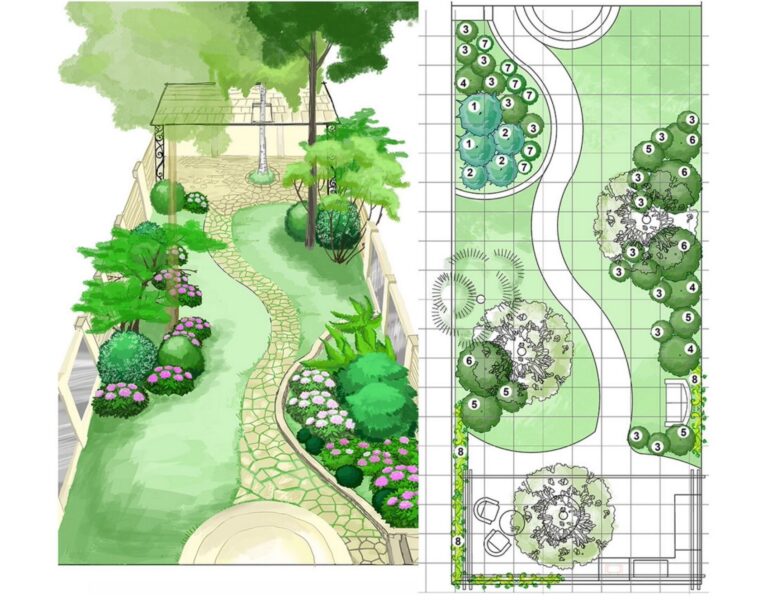
Unfurl this lush garden with many different types of plants thriving in raised beds. This raised bed garden design celebrates diversity — flowers, herbs, vegetables, and ornamentals growing side by side. You’ll love how the varied heights and textures create a tapestry of green.
In a diverse raised bed garden design, companion planting is key. Tall plants (tomatoes, sunflowers) provide shade for low growers (lettuce, herbs). The variety also attracts beneficial insects.
2. Lit Pathways – Raised Beds Illuminated at Night
Notice the lights — string lights or path lights illuminating the raised beds from the sides. This raised bed garden design extends usability into the evening, making after-dinner watering and harvesting a pleasure. You’ll love how the lights make the garden a magical night destination.
Add solar path lights or string lights to your raised bed garden design. The lights define the walkways and highlight the plants. Choose warm white bulbs for a soft, inviting glow.
3. Floral Tapestry – A Garden Full of Flowers
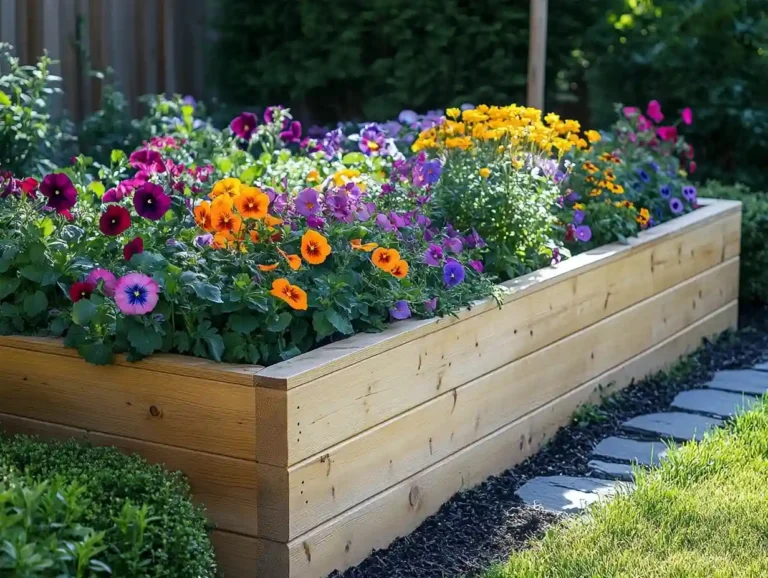
Step into this floral paradise — a raised bed garden design filled with lots of different types of flowers. The beds are arranged in a quilt of color, each block a new hue. You’ll appreciate how the raised beds keep the flowers organized and accessible.
For a cutting garden, use raised bed garden design to plant flowers in blocks by color or type. Zinnias, cosmos, and dahlias thrive in raised beds. The flowers will be at perfect height for cutting.
4. Twilight Garden – Plants and Lights Side by Side
See the garden at dusk — lots of plants in raised beds, with lights strung along the sides. This raised bed garden design is as beautiful at night as it is during the day. You’ll love how the lights reflect off the leaves, creating a fairy-tale atmosphere.
String lights on stakes or along the edges of your raised bed garden design. The lights will make your garden a place you want to be, even after sunset. They also help you spot pests or ripe vegetables.
5. Rock Edging – A Natural Border for Raised Beds
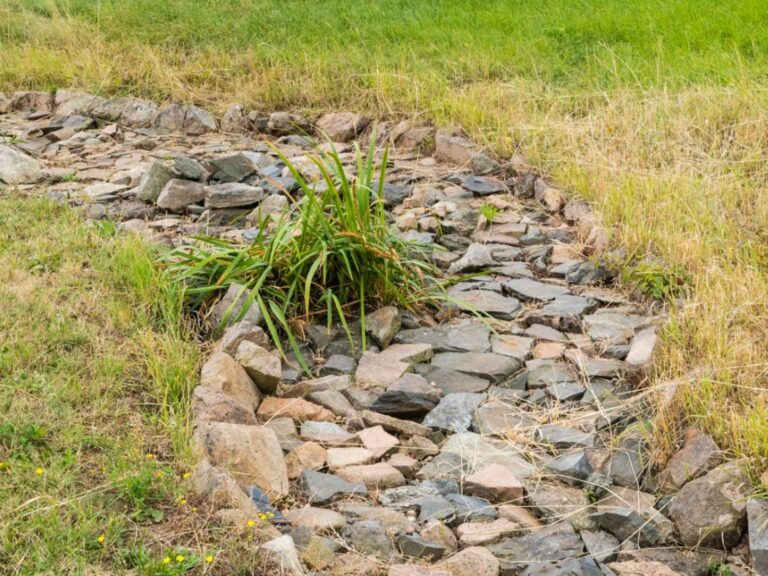
Notice the rock edging — natural stones surrounding the raised beds, holding in soil and adding rustic charm. This raised bed garden design blends with the landscape, the rocks looking like they’ve always been there. You’ll appreciate how the stone edge prevents grass from invading.
Use locally sourced fieldstone or river rock to edge your raised bed garden design. The stones are durable, natural, and won’t rot like wood. Stack them 6-8 inches high for a sturdy border.
6. Blooming Bounty – Flowers and Vegetables Together
See the integrated planting — flowers and vegetables growing together in raised beds. This raised bed garden design is both beautiful and productive, the flowers attracting pollinators to the veggies. You’ll love how marigolds and nasturtiums add color between the tomatoes and peppers.
Companion planting is natural in a raised bed garden design. Plant marigolds to deter pests, borage to attract bees, and nasturtiums as a trap crop. The flowers will make your vegetable garden look like a cottage garden.
7. Brick Beauty – Row of Brick Planters
Admire the brick planters — a row of raised beds built from brick, filled with lush green plants. This raised bed garden design is permanent and elegant, the brick adding warmth and structure. You’ll appreciate how the brick retains heat, warming the soil in spring.
Brick raised beds are a classic raised bed garden design for formal gardens. Lay the bricks in a running bond pattern, and cap them with flat pavers for a finished look. The beds will last for decades.
8. Light-Filled Garden – Lots of Plants, Lots of Lights
See the abundance — a garden filled with lots of plants, with lights strung throughout. This raised bed garden design is a nighttime oasis, the lights twinkling among the leaves. You’ll love how the garden becomes a destination for evening gatherings.
Plan your raised bed garden design with lighting in mind. Run low-voltage wire along the beds, or use solar lights on stakes. The lights will guide you through the garden at night and highlight your best plants.
9. Productive Veggies – A Dedicated Vegetable Garden
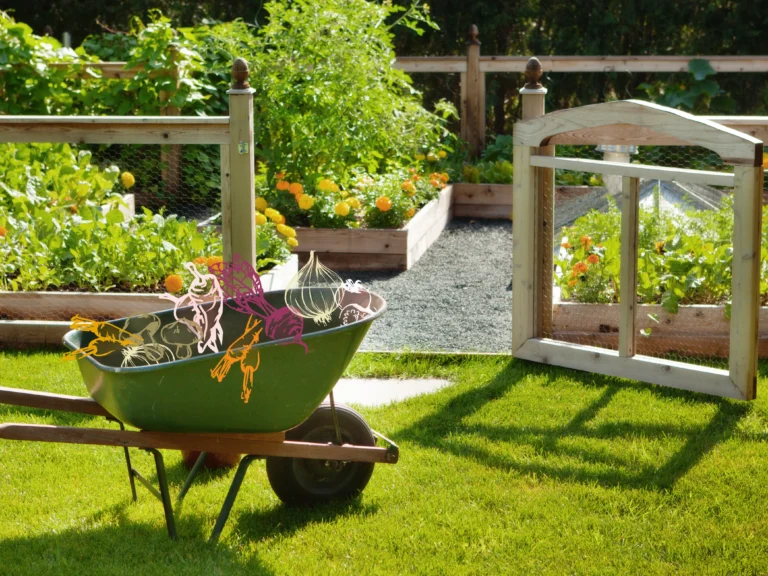
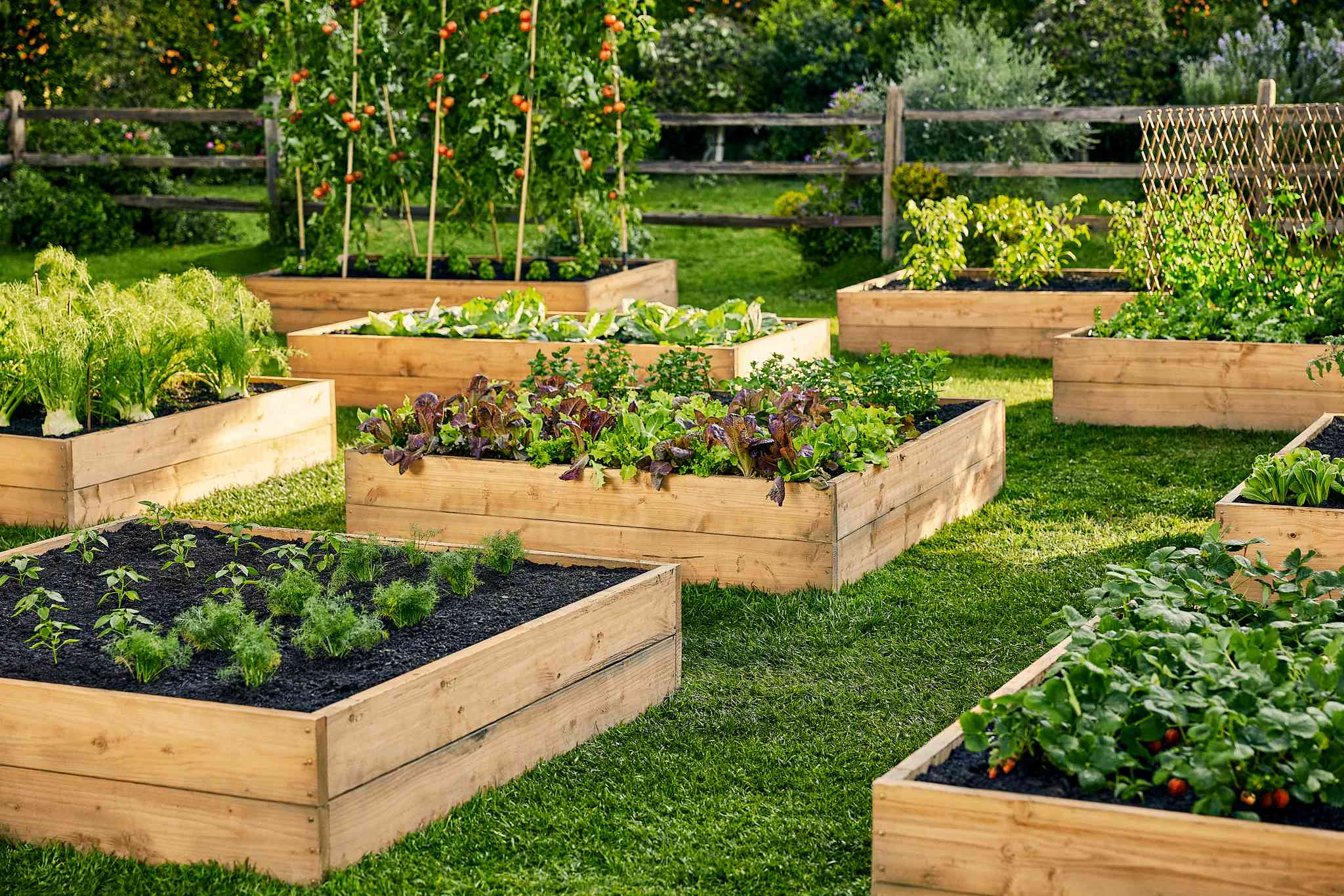
Step into this vegetable garden — neat raised beds filled with tomatoes, peppers, squash, and greens. This raised bed garden design is all about productivity, the beds arranged for easy access. You’ll appreciate how the raised beds warm up faster in spring, extending the growing season.
For a vegetable-focused raised bed garden design, orient the beds north-south for maximum sun exposure. Leave wide paths (at least 2 feet) for wheelbarrows and knees. Use trellises for vining plants to save space.
10. Flower Farmer – A Garden of Many Blooms
See the rainbow of flowers — a raised bed garden design filled with lots of different types of blooms. The beds are a riot of color, each one a different palette. You’ll love how the raised beds keep the flowers organized by height and color.
Use raised bed garden design to create a cut-flower garden. Plant tall flowers (sunflowers, zinnias) in the back, medium (cosmos, snapdragons) in the middle, and low (calendula, alyssum) in the front. The raised beds make cutting easy.
11. Cottage Garden Style – Flowers Spilling Over Beds
Notice the cottage feel — flowers spilling over the edges of raised beds, creating a soft, romantic look. This raised bed garden design is less formal, the plants allowed to be a bit wild. You’ll appreciate how the raised beds still provide order, even with the exuberant growth.
For a cottage garden raised bed design, let flowers trail over the edges. Use rosemary, thyme, or petunias as “spillers.” The raised beds elevate the plants, making the spillers more visible.
12. Biodiversity Heaven – Many Types of Plants
See the diverse planting — a garden with many different types of plants in raised beds. This raised bed garden design supports biodiversity, from pollinators to soil microbes. You’ll love how the mix of flowers, herbs, and vegetables creates a resilient ecosystem.
In a raised bed garden design, diversity is strength. Plant a mix of annuals and perennials, flowers and vegetables, herbs and ornamentals. The variety will confuse pests and attract beneficial insects.
13. Lit & Lush – A Garden of Plants and Lights
Admire the combination — lots of plants in raised beds, with lights strung overhead. This raised bed garden design is magical at twilight. You’ll love how the lights turn the garden into an outdoor room.
String lights from posts or a pergola over your raised bed garden design. The lights will make the garden feel like an extension of your home. Use a timer so they turn on automatically at dusk.
14. Edible Landscape – A Garden of Vegetables and Ornamentals
See the edible landscaping — vegetables, herbs, and ornamental plants all in raised beds. This raised bed garden design blurs the line between garden and landscape. You’ll appreciate how the raised beds keep the edible plants neat and accessible.
Place your raised bed garden design near your patio or outdoor living area. The edible plants will be convenient for cooking, and the ornamental plants will provide beauty. The raised beds define the space.
15. Pollinator Paradise – A Garden of Many Flowers
Notice the bees and butterflies — a raised bed garden design filled with flowers that attract pollinators. The beds are a buffet of nectar and pollen. You’ll love how the raised beds make it easy to plant in drifts of color.
To attract pollinators, plant a variety of flowers that bloom at different times. In your raised bed garden design, include early bloomers (crocus, pansies), summer flowers (zinnias, coneflowers), and late bloomers (asters, goldenrod). The raised beds keep the flowers organized.
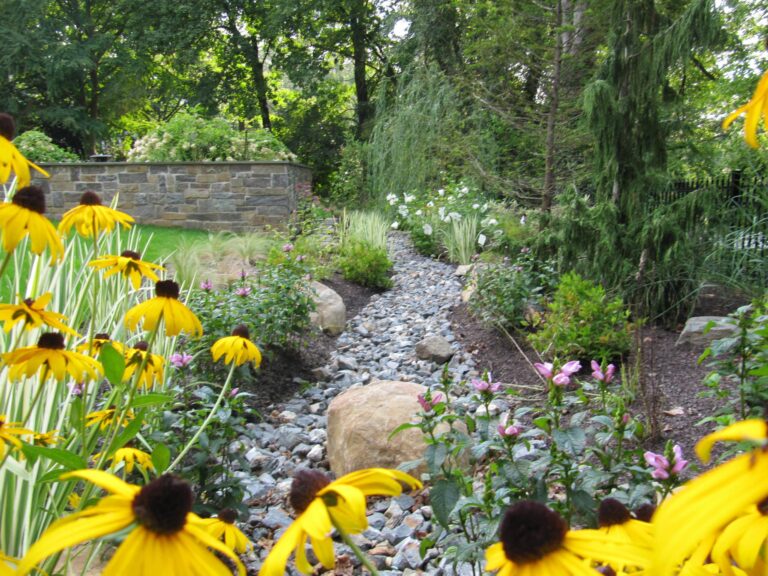
16. Stone Paths – Walkways Between Raised Beds
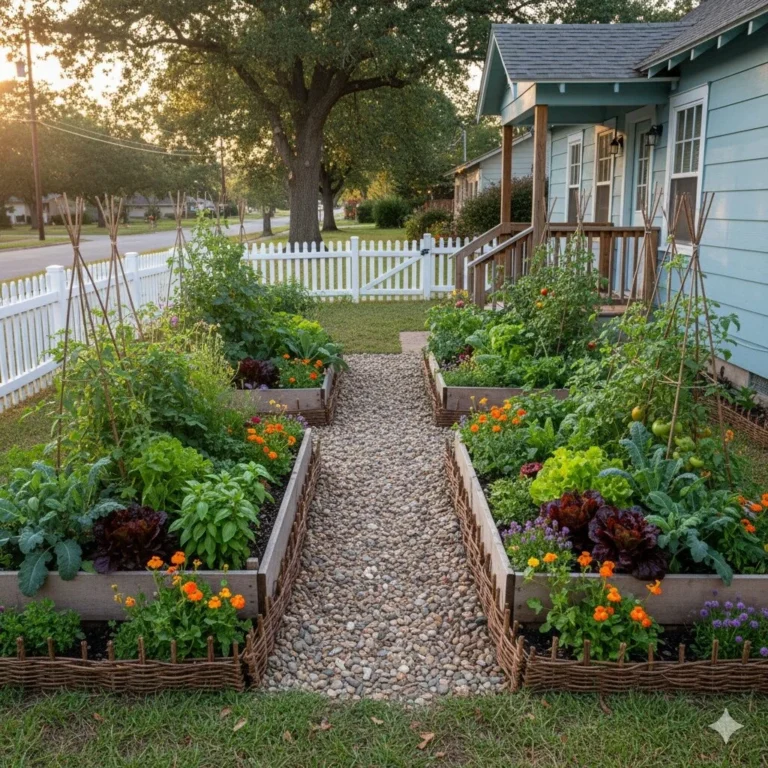
See the stone walkways — gravel or flagstone paths winding between raised beds. This raised bed garden design is both practical and beautiful, the paths keeping your feet dry. You’ll appreciate how the stone defines the garden’s geometry.
Create paths in your raised bed garden design using gravel, mulch, or stone. The paths should be at least 2 feet wide for easy access. The contrast between the hard path and soft plants is visually pleasing.
17. Wood & Light – Wooden Planters with String Lights
Admire the wooden planters — rustic raised beds made of wood, with lights strung between posts. This raised bed garden design is warm and inviting. You’ll love how the wood ages to a silvery grey, blending with the garden.
Wooden raised beds are a classic raised bed garden design. Use untreated cedar or redwood for rot resistance. Add corner posts to support string lights. The lights will make the garden usable after dark.
18. Abundant Blooms – A Garden Overflowing with Flowers
See the overflowing blooms — a raised bed garden design where flowers seem to spill from every bed. The colors are vibrant, the textures varied. You’ll love how the raised beds keep the flowers organized while still allowing a natural look.
For a lush look, plant your raised bed garden design with a mix of tall, medium, and low flowers. Allow some flowers to self-seed for a more natural appearance. The raised beds provide structure to the abundance.
19. Edible & Ornamental – A Mixed Garden
Notice the mix — vegetables, flowers, and herbs all in the same raised beds. This raised bed garden design is efficient and beautiful. You’ll appreciate how the flowers attract pollinators to the vegetables.
Mix edible and ornamental plants in your raised bed garden design. Plant calendula with tomatoes, nasturtiums with squash, and borage with strawberries. The flowers will make your vegetable garden look like a cottage garden.
20. Fence-Lined – Raised Beds Against a Fence
See the fence-line garden — raised beds placed against a wooden or wire fence. This raised bed garden design uses vertical space, with climbing plants on the fence. You’ll love how the fence becomes part of the garden, supporting beans, peas, and roses.
Maximize space in your raised bed garden design by placing beds against a fence. Use the fence for trellising. The fence also provides wind protection for tender plants.
21. Fruit & Veg – A Garden of Vegetables and Fruit
Notice the fruit plants — strawberries, blueberries, or dwarf fruit trees in raised beds. This raised bed garden design makes fruit growing accessible and organized. You’ll appreciate how the raised beds contain the spreading roots of some fruits.
Grow fruit in your raised bed garden design by planting dwarf varieties or berries. Strawberries thrive in raised beds (they stay cleaner). Blueberries need acidic soil, which is easy to control in a raised bed.
22. Rose Arbor – A Garden Focal Point
Admire the rose arbor — an archway covered in roses, leading into a raised bed garden design. The arbor is a focal point, the raised beds filling the space beyond. You’ll love how the arbor creates a sense of entry and mystery.
Add an arbor to your raised bed garden design to create a gateway. Plant climbing roses or jasmine on the arbor. The structure will draw the eye and add height to the garden.
🌱 Productive Beauty Compass: 6 Fresh Blueprints for Raised Bed Garden Design
- 📏 The Bed Width Rule: In raised bed garden design, the ideal width is 3-4 feet. This allows you to reach the center from either side without stepping on the soil. Length can be as long as you like, but keep it under 8 feet for easy access. Height should be 12-18 inches for most plants, 24 inches for root crops.
- 🪵 The Material Choice: For raised bed garden design, the best materials are rot-resistant wood (cedar, redwood, or black locust), stone, brick, or composite lumber. Avoid pressure-treated wood made before 2004 (it contains arsenic), and avoid railroad ties (they leach creosote). For budget beds, use untreated pine (will last 3-5 years).
- 🪴 The Soil Fill: The best soil mix for raised bed garden design is 60% topsoil, 30% compost, and 10% vermiculite or perlite. This mixture drains well, retains moisture, and provides nutrients. Fill the bed to the top; soil will settle. Never use garden soil alone — it’s too heavy and may contain weed seeds.
- 💧 The Irrigation Strategy: A drip irrigation system is a game-changer for raised bed garden design. Run a soaker hose or drip line through each bed, connected to a timer. This waters at the root zone, reducing evaporation and leaf diseases. Mulch the beds to retain moisture.
- 🌿 The Planting Grid: Use a planting grid to maximize space in raised bed garden design. Square foot gardening divides the bed into 1-foot squares. Plant each square with 1, 4, 9, or 16 plants, depending on spacing needs. This intensive planting reduces weeds and increases yield.
- 💡 The Lighting Idea: Extend your gardening time with lighting. Install solar path lights along the edges of your raised bed garden design, or string lights overhead. The lights make evening watering and harvesting a pleasure. They also add a magical quality to the garden at night.
Frequently Asked Questions
Q: How deep should raised beds be for vegetables?
Ans: In raised bed garden design, most vegetables need 12 inches of soil depth. Deep-rooted plants like tomatoes, peppers, and carrots need 18 inches. For a dedicated vegetable garden, build beds 18 inches tall. This depth also provides good drainage and prevents tree roots from invading. If your beds are on top of poor soil, go deeper (24 inches). The deeper the bed, the less frequent the watering.
Q: What is the most cost-effective material for raised beds?
Ans: The most cost-effective raised bed garden design material is untreated pine boards (2×6 or 2×8). Pine is inexpensive but will rot in 3-5 years. For a longer-lasting budget option, use concrete blocks or bricks (check classifieds for free or cheap used materials). Composite lumber is more expensive but lasts 20+ years. Avoid using old pallets unless you know they are heat-treated (not chemical-treated).
Q: How far apart should raised beds be placed?
Ans: In raised bed garden design, leave at least 2 feet of path between beds. This allows you to walk, kneel, and use a wheelbarrow. For wheelchair access, make paths 3 feet wide. The paths can be grass (cheap but needs mowing), gravel (good drainage), or mulch (soft underfoot). Avoid narrow paths that require stepping over plants.
Q: Can I put raised beds on a slope?
Ans: Yes, but you’ll need to terrace the slope. For a gentle slope, build the beds so they are level (dig into the slope on the high side, build up on the low side). For a steep slope, consider building terraced beds with retaining walls. In raised bed garden design on a slope, always orient the beds across the slope (contour) to prevent erosion and water runoff.
Q: How do I prevent weeds in raised beds?
Ans: To prevent weeds in raised bed garden design, start with weed-free soil. Lay cardboard or landscape fabric at the bottom of the bed before filling. Mulch the surface with straw, wood chips, or leaves. Weed regularly (a hoe is effective in raised beds). Plant closely to shade out weed seeds. With good initial preparation and mulch, weeding can be a 5-minute weekly task.
Conclusion
You’ve explored twenty-two raised bed garden design ideas — from brick planters and stone walkways to wooden beds with string lights, from flower-filled cutting gardens to productive vegetable plots. Each design shares a common philosophy: gardening should be organized, accessible, and beautiful. A raised bed garden design elevates the act of growing, both literally and figuratively. It brings the soil to a comfortable height, defines the space, and creates a garden that’s as lovely to look at as it is productive to tend.
Now it’s your turn to build your own raised beds. Start with one bed — 3×6 feet or 4×4 feet — in a sunny spot. Choose a material that fits your budget and style. Fill it with quality soil, and plant what you love to eat or look at. Add a path, a light, a chair. Your raised bed garden design will grow with you, season by season. The harvests will be generous, and the time spent among the plants will be its own reward. So dig in — literally — and let your garden begin. 🌱