That downspout splashing onto your lawn? The runoff streaming across your driveway? What if it became something beautiful instead? A thoughtful rain garden design captures that precious water and turns it into a lush, layered landscape — a place where native grasses drink deeply, where flowers bloom in wet hollows, and where a dry creek bed carries overflow like a ribbon of stone through your yard. Picture a small pond ringed with irises, a gentle stream that only runs after storms, and rocks that slow the water while pleasing the eye.
Whether you have a soggy spot that never drains or simply want to garden with purpose, these rain garden design ideas will help you work with water instead of fighting it. You’ll discover how to dig a shallow basin, choose plants that love both wet feet and dry spells, and create a feature that feeds the aquifer while feeding your soul. Step into these watery gardens — they hum with frogs and dragonflies, proof that the best landscapes are the ones that listen to the rain.
1. Small Pond in the Yard – A Pocket of Stillness
Dig a shallow depression and line it with native plants that thrive in wet soil. A successful rain garden design doesn’t need a liner or pump — it simply collects runoff and lets it percolate slowly into the earth. The small pond you see here might hold water for a day after rain, then dry to a damp meadow. You’ll love how it attracts birds, butterflies, and the quiet satisfaction of working with nature’s rhythm, like a cupped hand catching blessings.
Start your rain garden design by observing where water naturally pools. Dig a bowl-shaped basin 4-8 inches deep at the center, with gently sloping sides. Amend the soil with compost to help it drain. Plant moisture-loving species in the lowest zone, and watch as a problem spot transforms into the most alive corner of your yard — a pulse of green that beats with every storm.
2. Small Stream Running Through Lush Greenery – A Ribbon of Life
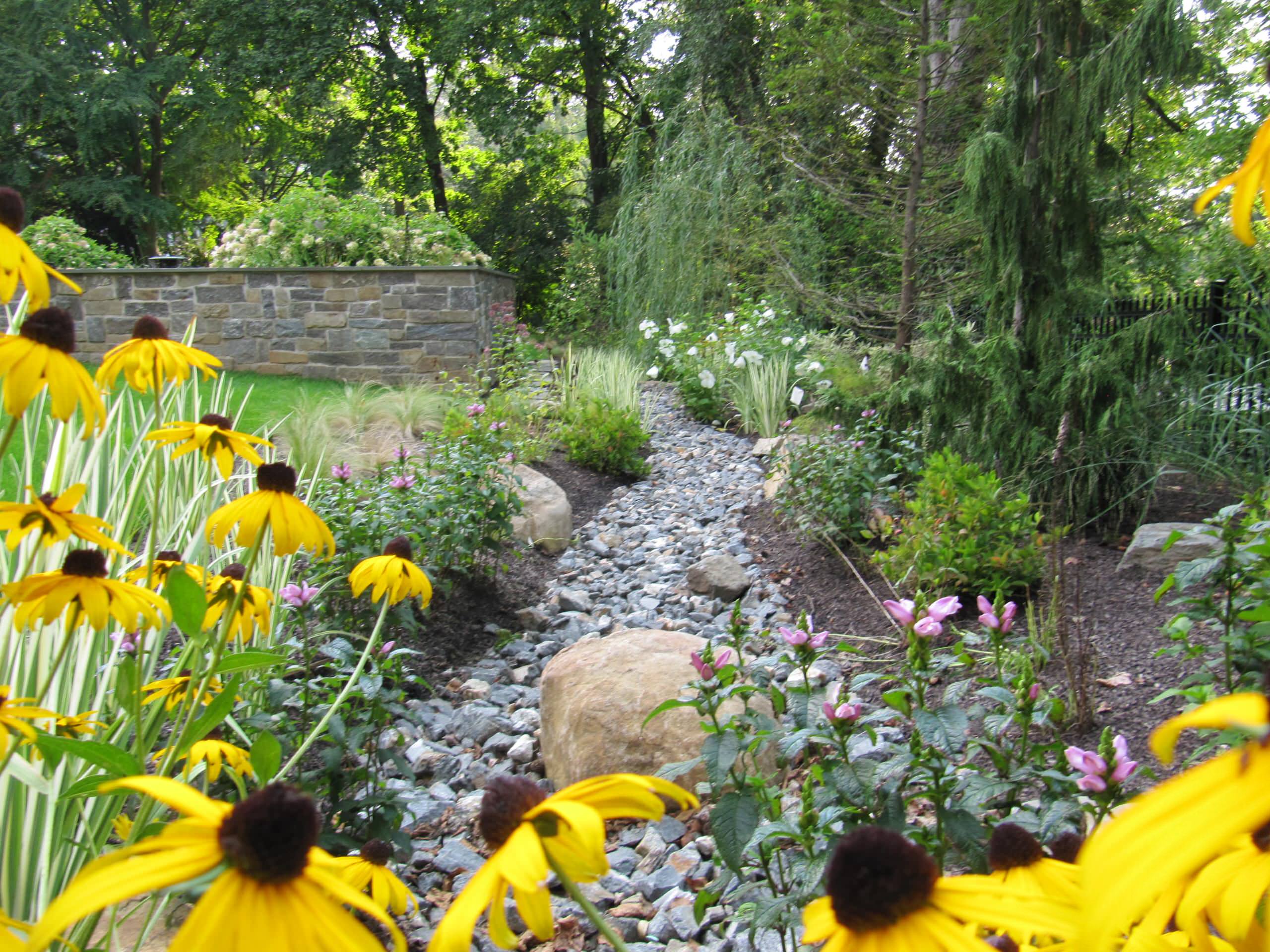
Carve a meandering swale that channels roof runoff through a garden of ferns and rushes. A dynamic rain garden design often includes a dry streambed — a winding trench lined with river rock that carries water only after storms. You’ll appreciate how the stream bed adds structure even when dry, like a ancient riverbed etched into a canyon floor, telling stories of water past.
For a natural-looking rain garden design, use stones of varying sizes to create the streambed. Bury a perforated pipe underneath to help water soak in faster. Plant along the edges with blue flag iris, turtlehead, and swamp milkweed. When rain comes, the stream awakens — a temporary torrent that disappears as quickly as it arrived, leaving behind only the memory of movement and a garden made lush by the gift.
3. Two Pictures Side by Side – Before and After the Rain
See the transformation of a dry basin into a temporary wetland. A well-designed rain garden design looks intentional in all seasons — a depression that reads as a garden feature when dry, a shimmering pool when wet. You’ll love how the same space can be a meadow one week and a reflection pond the next, like a landscape that changes its dress with the weather, always beautiful, never boring.
This before-and-after approach to rain garden design reminds us to embrace impermanence. The garden is not static; it breathes with the sky. Plant a ring of cardinal flower where water lingers longest, and higher up, plant goldenrod and aster that can handle drier conditions. The transition zone is where the magic happens — plants adapted to both wet and dry, thriving on the edge of possibility.
4. Another Small Stream Through the Forest – Woodland Wetland
Let a shady woodland corner become a seasonal stream. A shaded rain garden design uses ferns, hostas, and native sedges that thrive in the damp understory. You’ll feel like you’ve stumbled upon a secret spring, mossy and cool, where the only sound is dripping water and rustling leaves. The garden disappears into the forest, then reappears after rain, a hidden gem that rewards the observant.
For a woodland rain garden design, avoid heavy rock work that looks out of place. Use natural logs and leaf litter to edge the basin. Plant jewelweed, cardinal flower, and cinnamon fern. The goal is to make the rain garden feel like it has always been there — a natural depression that the forest simply grew around, accepting the water as a gift.
5. Garden With Flowers, Rocks, and Water Features – Layered Beauty
Combine a rain garden with a decorative water feature for year-round interest. An elaborate rain garden design might include a small recirculating fountain at the center, with the overflow feeding the planted basin. You’ll love the sound of trickling water even in dry spells, while the rain garden handles the runoff when storms come, like a landscape that sings two different songs — one for sunshine, one for rain.
For a hybrid rain garden design, place the fountain or birdbath at the highest point, with a channel of stones leading to the planted depression. Choose plants that can handle occasional overflow: pickerelweed, arrowhead, and marsh marigold. The result is a garden that entertains every day and works hard on rainy ones — beauty with benefits, the best kind of landscape.
6. Rocks and Flowers Near the Sidewalk – Curb Appeal With Purpose
Turn a splash zone by the sidewalk into a rock garden that catches runoff. A street-side rain garden design reduces puddles and filters pollutants before they reach the storm drain. You’ll appreciate how the garden slows down the water, letting it soak into the ground instead of carrying motor oil and fertilizer into local streams, like a small but mighty guardian at the edge of your property.
For a curb-adjacent rain garden design, dig a basin that’s set back at least 10 feet from the sidewalk to avoid undermining it. Use tough, salt-tolerant plants like little bluestem, black-eyed Susan, and purple coneflower. Add a few boulders where water enters to prevent erosion. The garden will become a talking point with neighbors — proof that environmental care and beauty can share the same small space.
7. Stream Running Through the Yard Next to the House – Foundation Friendly
Channel downspout water away from your foundation and into a planted swale. A practical rain garden design can solve basement moisture problems while adding beauty. You’ll love how the stream of stones and flowers draws the eye away from the gutter, turning a necessary function into a landscape feature, like a utility that wears a party dress — still working, but now a joy to see.
To protect your foundation in a rain garden design, keep the basin at least 10 feet from the house walls. Slope the ground away from the building, and use a downspout extension to carry water to the garden’s inlet. The stream bed should be wide and shallow, with rocks that slow the water and let it spread. Your basement stays dry, and your garden gets a drink — a partnership between house and land.
8. Stream Running Through a Lush Green Forest – Deep Shade Solutions
Embrace the shadows with a rain garden designed for deep canopy. A woodland rain garden design uses shade-tolerant moisture lovers like foamflower, wild ginger, and jack-in-the-pulpit. You’ll feel like you’ve discovered a hidden spring in an old forest — cool, green, and mysterious, where the sound of dripping leaves replaces the chatter of lawnmowers.
For a shaded rain garden design, don’t expect as many flowers as a sunny version. Celebrate foliage: the heart-shaped leaves of wild ginger, the feathery fronds of ferns, the glossy green of foamflower. Add a few logs and stumps for structure. The garden will feel like an extension of the natural woods, a place where water collects and disappears under a canopy of green — a secret room in your own backyard.
9. Small Stream in the Middle of the Garden – Central Feature
Make the rain garden the focal point of your yard — not a hidden utility but a celebrated feature. A central rain garden design might include a bridge or stepping stones across the dry streambed, inviting visitors to walk through the garden. You’ll love how the water feature becomes a destination, a place to sit and watch dragonflies patrol the wet zone, like a tiny river that runs through your private park.
For a prominent rain garden design, use larger rocks and more dramatic plantings. Add a bench facing the basin so you can enjoy the garden during dry spells. When rain fills the channel, sit and listen to the temporary stream — a reminder that the best gardens are not static paintings but living performances, changing with every cloud.
10. Garden With Water in the Center – Surrounded by Blooms
Plant a ring of flowers around a central wet zone for a formal rain garden. A circular rain garden design looks intentional and elegant, like a natural swimming pool filled with blooms instead of chlorine. You’ll appreciate how the lowest point collects water after rain, creating a temporary reflecting pool surrounded by irises and joe-pye weed, a crown of petals holding a mirror to the sky.
To create a circular rain garden design, mark a wide circle (10-15 feet across) and excavate the center to be 6 inches deeper than the edges. Plant moisture lovers in the lowest ring, and transition to drier plants as you move outward. The effect is a layered bullseye of foliage and flowers, with the center changing from dry soil to standing water depending on the weather — a living diagram of how water moves through the landscape.
11. Lots of Plants and Flowers Around the Basin – Lush Borders
Pack the edges of your rain garden with dense plantings that hide the basin’s edge. A lush rain garden design uses tall grasses and bold perennials to create a sense of enclosure, turning a utility basin into a secret garden. You’ll feel like you’re stepping into a meadow when you approach, with only a hint of the water-holding function hidden beneath the flowers.
For a naturalistic rain garden design, avoid formal edging or manicured lawns right up to the basin. Let the plants spill over the edges. Use drifts of the same species repeated to create rhythm. The garden should feel abundant and a little wild, like a wetland edge that’s been tamed just enough to live next to — a place where order and chaos hold hands.
12. Car Parked Next to a Stream – Runoff Solutions for Driveways
Catch driveway runoff before it reaches the street with a swale along the pavement edge. A practical rain garden design for suburban lots intercepts water that would otherwise carry oil and tire dust into storm drains. You’ll appreciate how the garden cleans the water naturally, with plants and soil filtering out pollutants, like a kidney for your driveway, turning poison into petal.
For a driveway-adjacent rain garden design, dig a long, shallow trench parallel to the pavement. Line it with river rock and plant tough, salt-tolerant species like little bluestem, switchgrass, and black-eyed Susan. The garden will absorb first-flush runoff, and the deep roots will help stormwater percolate into the ground rather than running off. Your car stays dry, and the local creek stays cleaner — a small act with large impact.
13. Two Pictures Side by Side – Garden Transformation
Witness the power of a rain garden to turn a soggy mess into a showpiece. These before-and-after shots of rain garden design show a muddy, bare spot transformed into a layered planting of rushes, sedges, and wildflowers. You’ll feel inspired to tackle that low spot that never dries — it’s not a problem, it’s an opportunity, like a lump of clay waiting to become a bowl.
Document your own rain garden design journey with photos. You’ll be amazed at the difference a few months can make. The first year, the plants look small; the second year, they fill in; the third year, it’s unrecognizable. Patience is the gardener’s secret weapon — rain gardens grow into themselves slowly, like children becoming adults, each season adding depth and beauty.
14. Garden Filled With Plants and Rocks – Textural Harmony
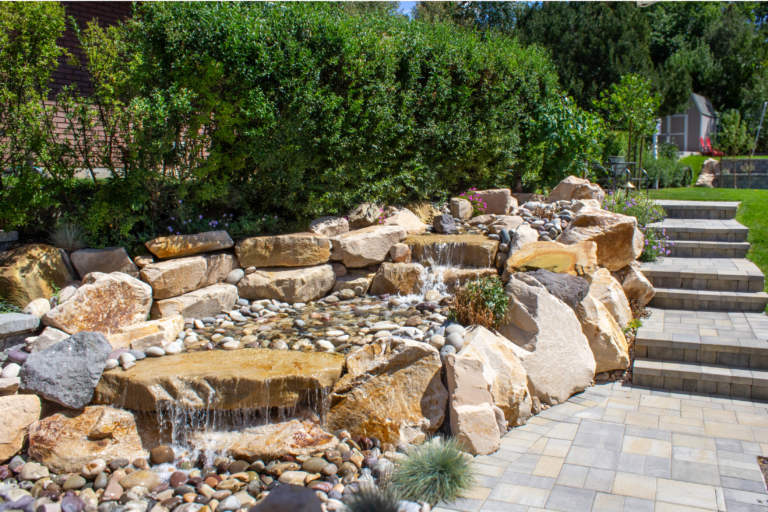
Mix boulders and plants to create a rock garden that also functions as a rain garden. A hybrid rain garden design uses stones to slow water flow and create micro-habitats for moisture-loving plants. You’ll love the texture contrast: rough rocks against soft foliage, gray stone against green leaves, like a mountain stream that’s been transplanted to your backyard.
For a rock-and-plant rain garden design, arrange boulders so they create small pockets that hold water and soil. Plant in those pockets with species that like their feet wet but their crowns dry. The rocks also protect plants from being washed away during heavy rain. The result is a garden that looks like a natural outcrop, with water finding its way through the crevices — functional sculpture, sculptural function.
15. Build a Backyard Rain Garden That Works – The Practical Guide
Learn the step-by-step process of sizing, siting, and planting a functional rain garden. A successful rain garden design starts with a percolation test: dig a hole, fill it with water, and time how long it takes to drain. You’ll understand your soil’s personality — sand drains fast, clay drains slow — and choose plants accordingly, like a chef tasting ingredients before planning the menu.
This practical rain garden design resource reminds us that good gardens are built on good science. Calculate how much roof area drains to your garden, then size the basin to hold the first inch of rainfall. The math sounds intimidating, but online calculators make it easy. A correctly sized rain garden will empty within 24-48 hours — no mosquitoes, no soggy lawn, just happy plants and clean water soaking into the earth.
16. Another Stream Through the Forest – Repeat the Magic
Create multiple small rain gardens instead of one large one for a more natural look. A distributed rain garden design mimics how water moves through a healthy landscape — in small pockets, not one big pool. You’ll love the feeling of discovering little wetland after little wetland as you walk through your yard, like a landscape that rewards exploration with hidden damp corners full of ferns and flowers.
For a series of small rain garden design features, observe where water naturally collects after storms. Place a basin at each low point, connected by shallow swales. Use stepping stones to cross the swales. The effect is a landscape that works with its natural hydrology, not against it — a garden that doesn’t fight the rain but welcomes it like an old friend.
17. Flowers and Rocks in Front of the House – Curb Appeal With Function
Put your rain garden right in the front yard, where it can catch runoff and impress the neighbors. A visible rain garden design starts conversations about conservation. You’ll be surprised how many people stop to ask what you’re growing — and how many go home to build their own, inspired by your willingness to show that eco-friendly can also be beautiful.
For a front-yard rain garden design, choose well-behaved plants that look tidy even in the off-season. Switchgrass, little bluestem, and purple coneflower provide winter interest. Add a few large boulders for structure, and edge the basin with a mowing strip so the lawn doesn’t invade. Your rain garden will be a source of pride — proof that doing good for the planet doesn’t require sacrificing aesthetics.
18. Small Pond Surrounded by Rocks and Flowers – Year-Round Water
Add a lined pond as the centerpiece of your rain garden, with overflow feeding a planted basin. A hybrid rain garden design combines a permanent water feature with a seasonal wetland. You’ll love the sound of the fountain or waterfall, and the way the pond attracts frogs and dragonflies even in dry weather, like a hearth in the garden — a gathering place for both people and wildlife.
The pond in this rain garden design should be designed to overflow during heavy rain, sending excess water into the planted basin. The basin, in turn, should handle the overflow and let it soak into the ground. The two features work together — permanent water for beauty, seasonal water for drainage. It’s the best of both worlds, a garden that knows how to hold and how to let go.
19. Pond With Rocks and Water Lilies – Stillness and Blooms
Plant water lilies in a small garden pond to add floating color. A serene rain garden design can include a still pool where rain collects and lilies open to the sun. You’ll feel the calm that water brings, even a tiny pond, like a cup of tea for the eyes — small but perfectly calming, a place to rest your gaze after a long day.
The pond in this rain garden design works best as the lowest point in the system, where water naturally collects. Use a flexible liner, add a few inches of sand and gravel for planting, then drop in hardy water lilies. Surround the pond with moisture-loving plants that can handle occasional overflow. The result is a garden that captures rain, filters it through plants, and offers it up as beauty — a closed loop of function and delight.
20. Rocks, Water, and Flowers in the Middle – A Living Triptych
Arrange a composition of boulders, a small pool, and flowering perennials for a focal point. A sculptural rain garden design treats water as an element of design, not just a utility. You’ll appreciate how the eye moves from rock to water to flower, each element supporting the others, like a still life painted by a master — every object in its right place.
For a highly designed rain garden design, choose boulders with interesting shapes and colors. Place them so they create small pockets for plants. Add a shallow liner and a few inches of water for a permanent pool. Plant around the edges with Japanese iris, hosta, and dwarf cattails. The garden will feel like a miniature landscape, a world in miniature where every inch is intentional and beautiful.
21. Stream Running Through a Lush Green Garden – The Ultimate Goal
Dream of a garden where a temporary stream runs after every rain, then fades like a whisper. An aspirational rain garden design works with water’s ephemeral nature, celebrating the flash flood and the quiet dry spell equally. You’ll love the way the garden changes with the weather — sometimes a meadow, sometimes a marsh, always alive, like a landscape that breathes in the rain and exhales slowly.
This final rain garden design inspiration reminds us that the best gardens work with nature, not against it. Don’t fight the wet spot — plant it. Don’t curse the runoff — channel it. The rain that falls on your roof is a gift, not a problem. Let it run through your garden, feed your plants, and sink into the earth. Your yard will be more beautiful, your basement drier, and your local streams cleaner. That’s the promise of a rain garden — not just a design, but a philosophy: water is a blessing, and gardens are where blessings bloom.
🌊 The Puddle & The Petal: 6 Essential Steps to a Rain Garden Design That Holds Water & Heart
- 🌧️ Watch Where Water Wants to Go: Before any rain garden design, observe your yard during a storm. Note where runoff flows, where puddles linger, and where downspouts empty. The water is teaching you where to dig — follow its lead like a scout reading deer trails, and you’ll place your garden where it can do the most good.
- 🧪 Test Your Soil’s Soul: Dig a hole, fill it with water, and time the drain. In a functional rain garden design, water should disappear within 24-48 hours. If it sits for days, amend the soil with compost or sand, or choose a different spot. Clay-heavy ground can be slow; sandy soil drains fast. Know your earth before you plant, and you’ll avoid a mosquito nursery.
- 📏 Size It to the Roof That Feeds It: A properly sized rain garden design should hold the first inch of rainfall from the area it serves. Measure your roof or pavement, calculate the square footage, and size the basin accordingly. Online calculators do the math. A garden that’s too small will overflow; too large is just extra flowers. Right-sized is right-minded.
- 🌿 Zone Your Plants by Wetness: In a layered rain garden design, plant the deepest, wettest zone with true moisture lovers: blue flag iris, cardinal flower, swamp milkweed. The edges, which stay drier, get plants that tolerate both wet and dry: black-eyed Susan, little bluestem, wild bergamot. Match the plant to the puddle, and everything thrives.
- 🪨 Add Rocks to Slow the Flow: Place boulders or large gravel at the inlet where water enters your rain garden design. The rocks diffuse the force of the water, preventing erosion and giving sediment a chance to settle. A few well-placed stones can turn a gully-washer into a gentle spread, like a speed bump for stormwater.
- 🪺 Commit to Two Seasons of Patience: A new rain garden design takes time to establish. The first year, the plants look small and weeding is a chore. The second year, they fill in. By year three, the garden is self-sustaining — a living system that needs only occasional weeding and an annual cutback. Patience is the gardener’s greatest tool; water is the patient teacher.
Frequently Asked Questions
Q: Will a rain garden breed mosquitoes?
Ans: No, a properly built rain garden design should drain within 24-48 hours — too fast for mosquitoes to complete their life cycle (which takes 7-10 days). The key is good drainage. If your soil is heavy clay, amend it or choose a different location. A mosquito-infested rain garden is a sign that it was built incorrectly — either too deep, on the wrong soil, or without an overflow path. Fix the drainage, and the mosquitoes disappear.
Q: How deep should my rain garden be?
Ans: A typical rain garden design is 4-8 inches deep at the center, with gently sloping sides. If you dig deeper, the basin may hold water too long (risking mosquitoes) or require too much excavation. If the garden is too shallow, it won’t hold enough runoff. The Goldilocks depth is just right — deep enough to catch a good rain, shallow enough to dry out quickly. Measure your specific runoff volume and soil percolation rate to find your perfect number.
Q: What plants are best for a rain garden design?
Ans: Native moisture-lovers are the MVPs of any rain garden design. For sunny gardens: blue flag iris, swamp milkweed, joe-pye weed, cardinal flower, turtlehead, and rose mallow. For shady gardens: ferns, wild ginger, foamflower, jack-in-the-pulpit, and jewelweed. Avoid invasives like purple loosestrife. Your state’s native plant society can provide a tailored list. Natives are adapted to your local rainfall patterns and support local pollinators — a rain garden planted with natives is a wildlife magnet.
Q: Can I put a rain garden near my house foundation?
Ans: Keep a rain garden design at least 10 feet away from your foundation to avoid seepage issues. Slope the ground away from the house toward the garden. Use downspout extensions to carry water from the gutter to the garden inlet. A rain garden too close to the house can cause basement moisture problems. Ten feet is a safe buffer — close enough to catch the runoff, far enough to protect your walls.
Q: How much maintenance does a rain garden design require?
Ans: A mature rain garden design needs less maintenance than a lawn. Weed heavily in the first two years until plants fill in. Water new plantings during dry spells for the first season (after that, the rain garden’s name is literal — the rain should sustain it). Cut back dead stems in late winter or early spring. Remove sediment from the inlet every few years. That’s it. After establishment, a rain garden is mostly self-sufficient — a gift of time and beauty that keeps giving.
Conclusion
You’ve wandered through twenty-one watery visions of rain garden design — from small ponds ringed with irises to dry creek beds that sing only after storms, from shady woodland basins to sunny roadside swales that filter driveway runoff. Each image held a different promise, but all shared the same heartbeat: water, that most essential and overlooked element, can be a partner in your garden, not a problem. The rain that falls on your roof, the runoff that slicks your driveway, the puddle that forms in that low spot — these aren’t nuisances. They are opportunities to plant something beautiful, to create habitat, to do a small but real thing for the watershed that flows past your home.
So grab a shovel and a rain gauge. Test your soil. Watch where the water goes. Your rain garden design doesn’t need to be perfect next month — it needs to be started this season. Dig a shallow basin. Tuck in a few native plugs. Wait for the first storm. When the water comes, stand at your window and watch it fill your garden, then slowly sink into the earth. The frogs will find it. The dragonflies will patrol it. And you will know that you’ve turned a problem into a prayer — a small act of beauty and humility, offered to the sky every time it rains.